Rose of Pain: Somaesthetic Inquiry
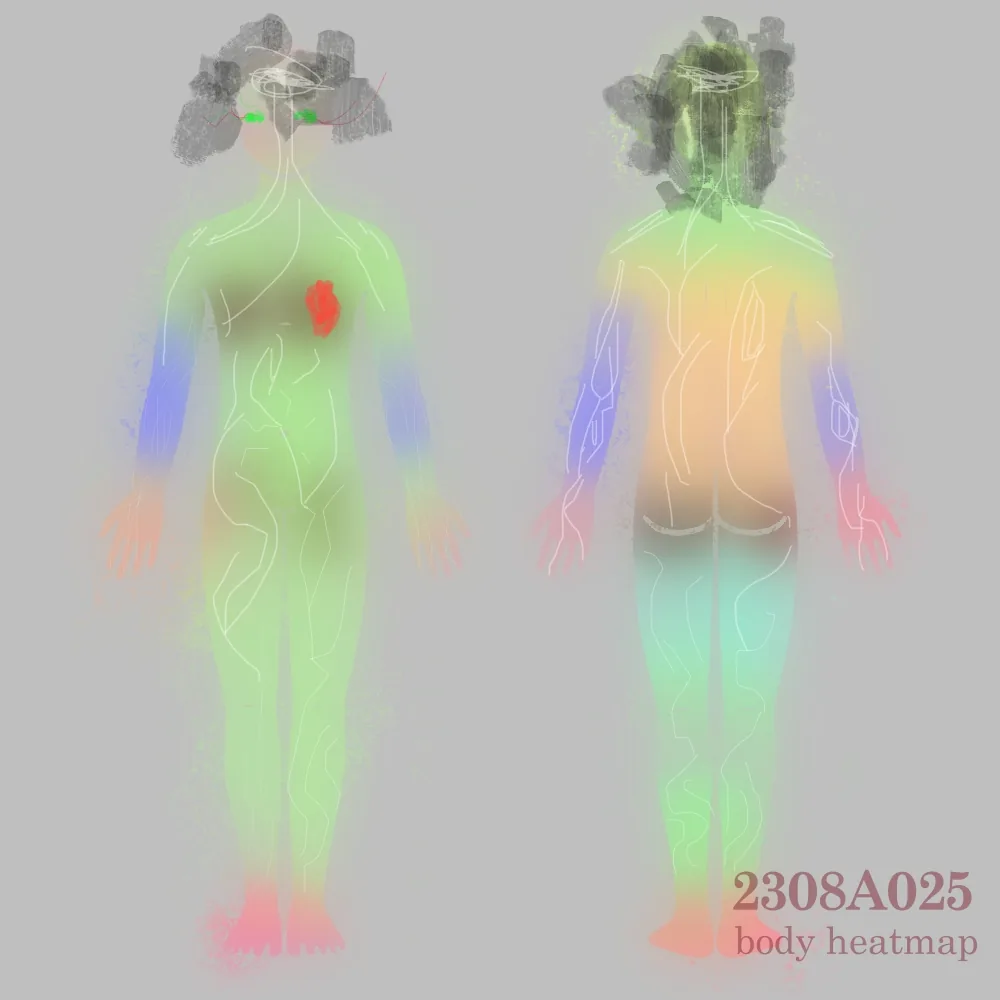
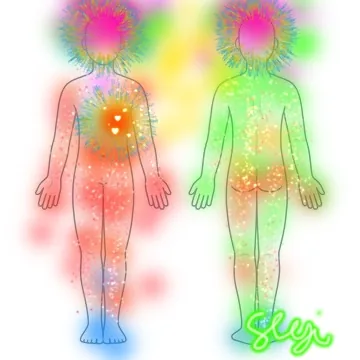
A somaesthetic research-through-design artifact built from metallic foil paper, copper wire, and tin wire, grounded in body heatmaps that trace where intense emotions are physically felt.
Research question
What happens when ugliness is the intention of a design rather than its failure?
Context & motivation
Most commercial design work defaults to comfort, smoothness, and visual appeal. This inquiry deliberately inverted that assumption through somaesthetics, using embodied sensation as design material.
Methodology
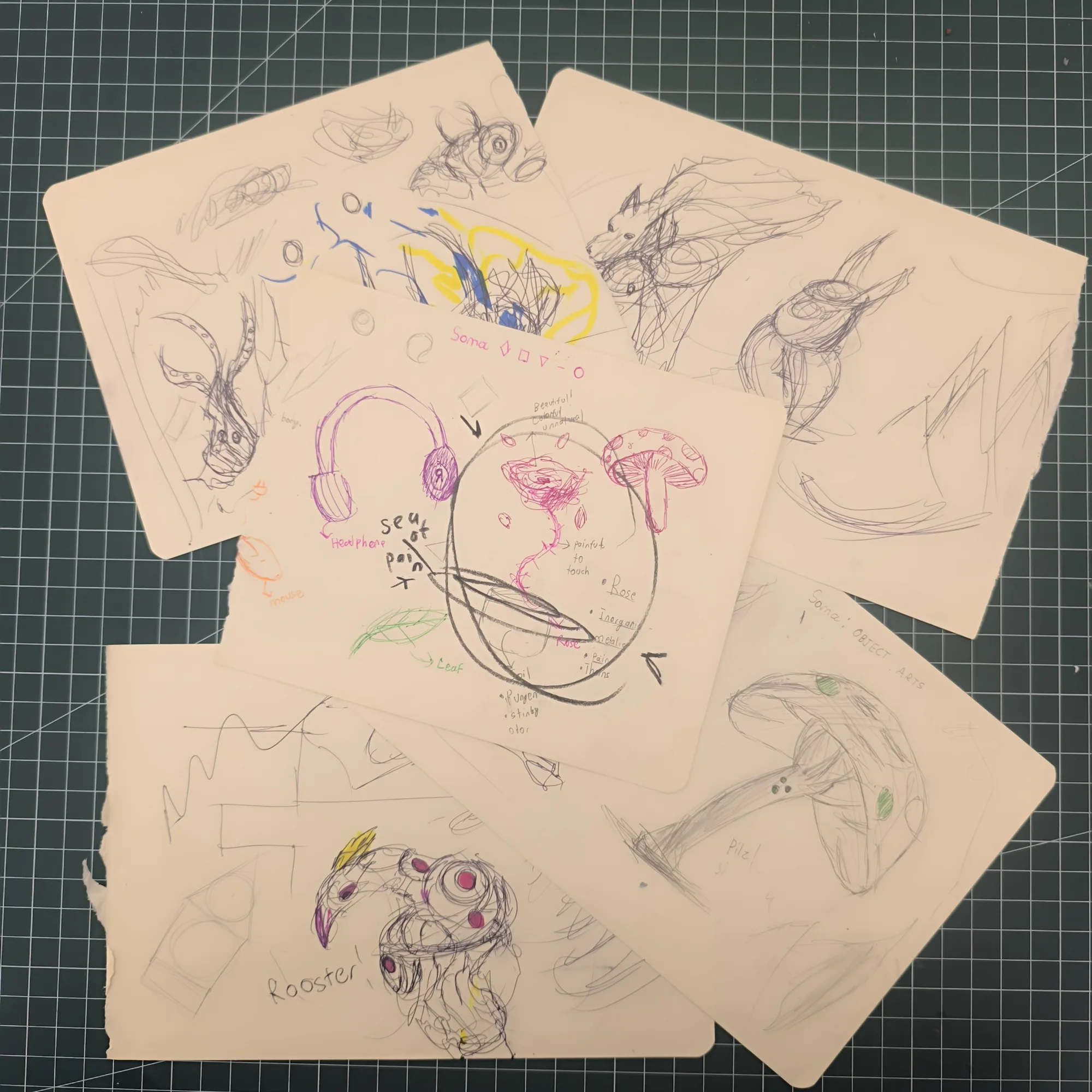
Research-through-design: mapping emotional states onto body heatmaps first, then translating those somatic regions into strict material constraints (excluding all organic softness or warmth).
Experiment & prototype
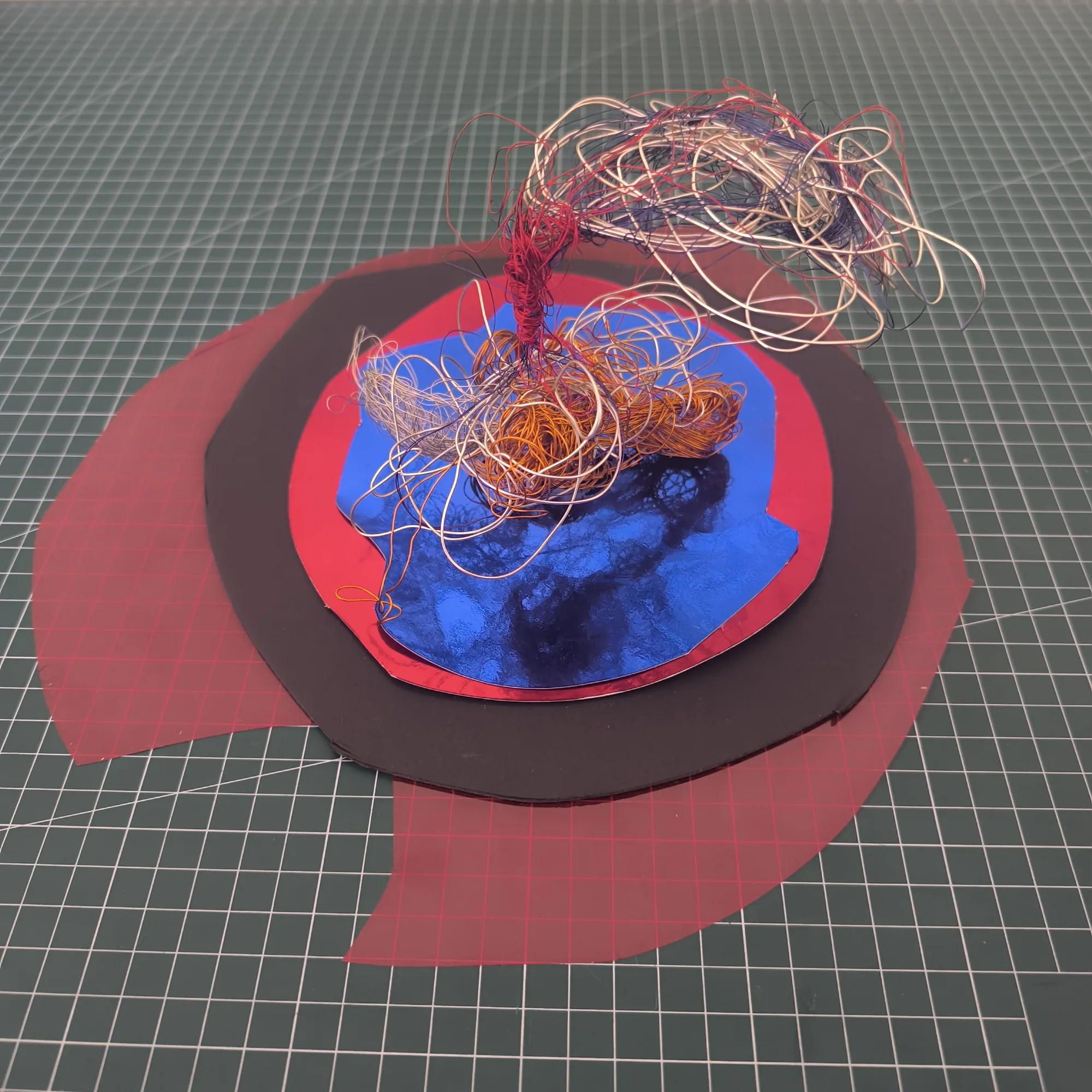
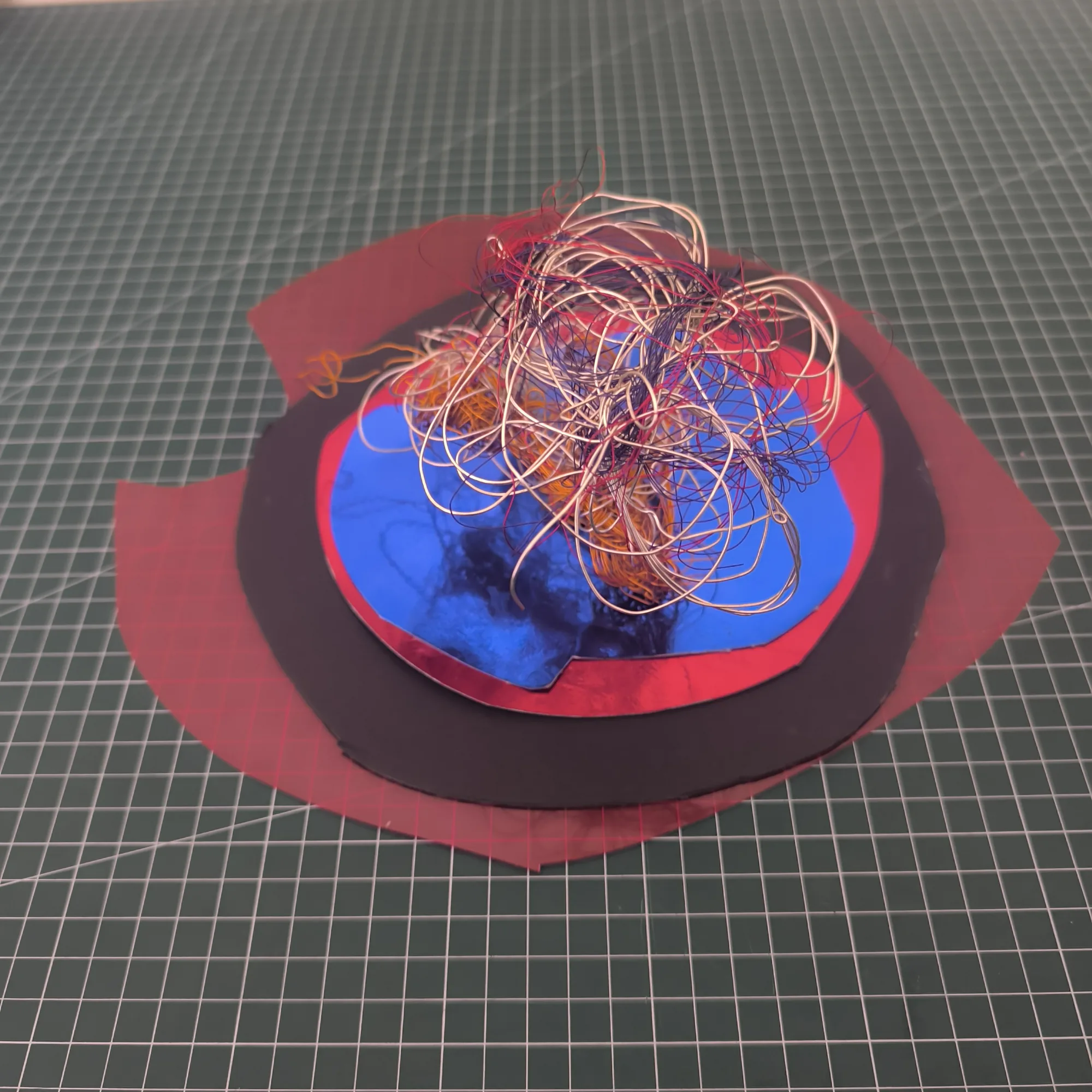
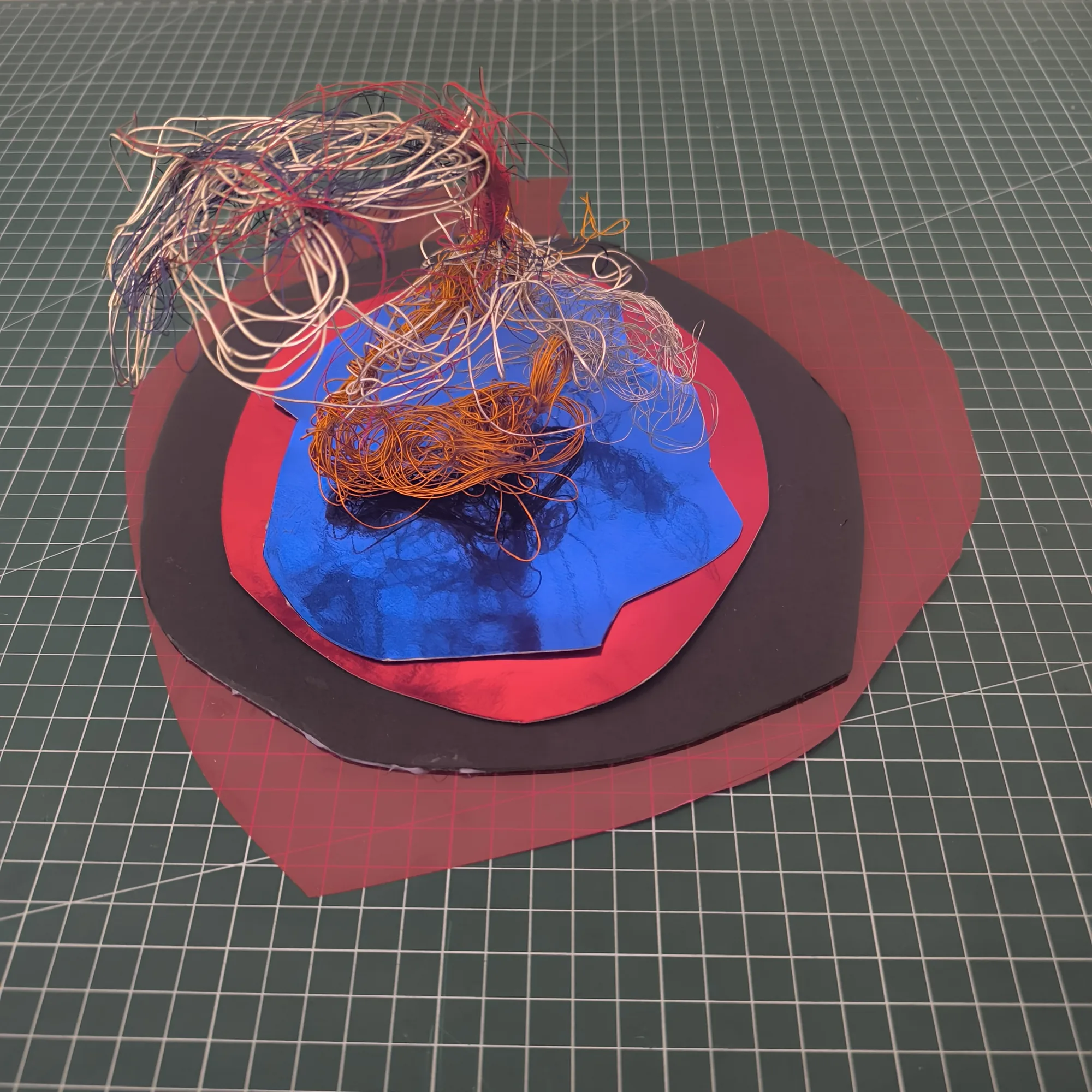
Physical rose sculpture constructed strictly from metallic foil paper, copper wire, and tin wire, framed with red (rage and fear) and blue (quiet collapse of longing) visual registers.
Findings & observations
Refusing soft or natural materials turned a familiar emblem of beauty (a rose) into an uncomfortable tactile object whose tension stays legible immediately without explanatory text.
Limitations
Personal first-person research-through-design exploration, reflective and interpretive rather than an empirical participant study.
Implications & next steps
Informs interaction design by demonstrating how intentional friction, material resistance, and restrained emotional coding can communicate meaning more honestly than decorative polish.